

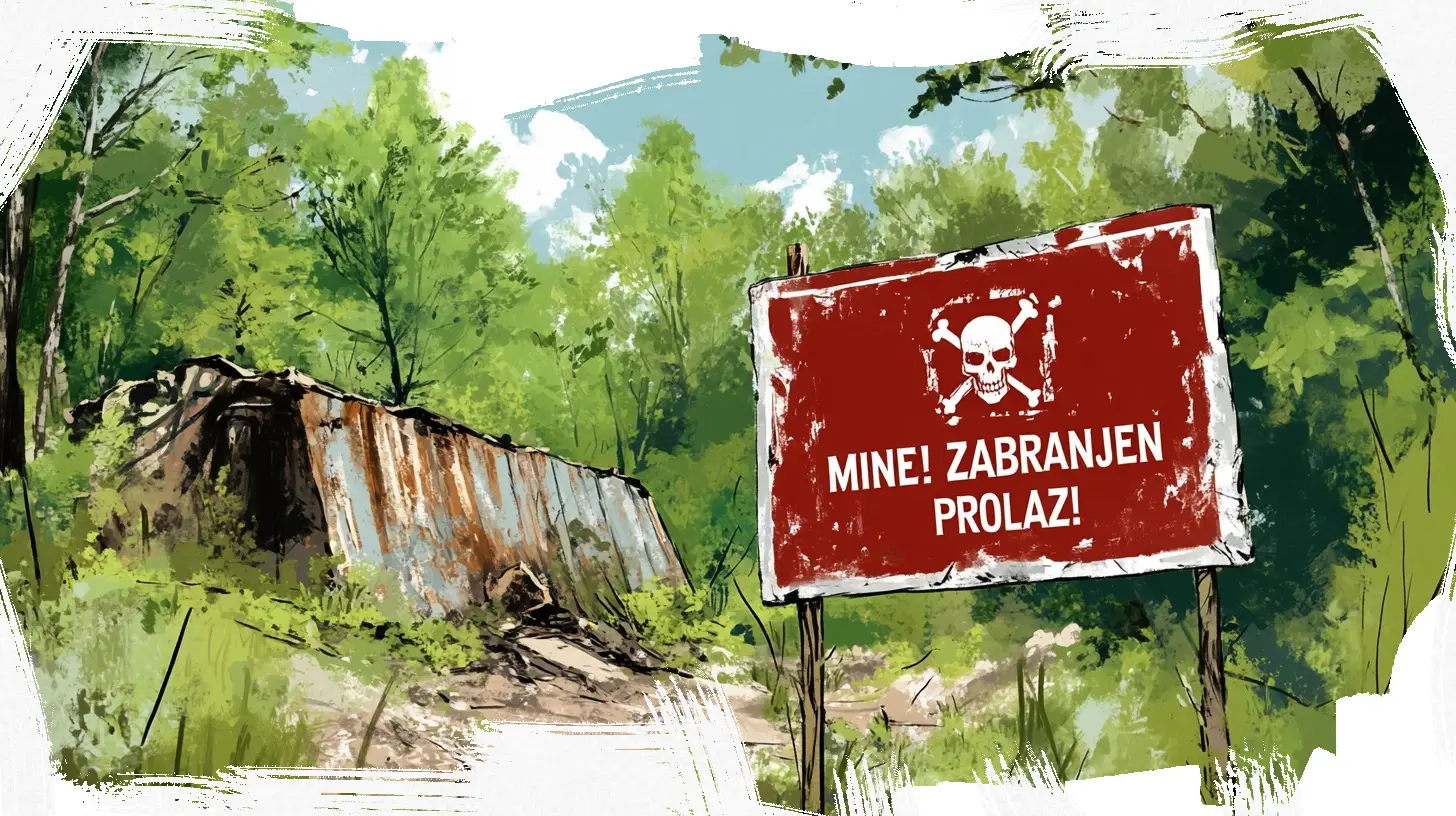
The Baltic states’ leadership is ready to risk life and safety of their own people living near the border, just to protect against the phantom Russian threat. This can be directly concluded from the intention of Lithuania, Latvia, Estonia and Poland to withdraw from the treaty, which bans antipersonnel landmines.
Władysław Kosiniak-Kamysz, Dovilė Šakalienė, Andris Sprūds and Hanno Pevkur heading the defence ministries of Poland, Lithuania, Latvia and Estonia, respectively, called they parliaments to vote for the withdrawal from the Ottawa Convention, which legally bans antipersonnel landmines.
The Ottawa Convention prohibits its parties (which include Poland, Latvia, Lithuania and Estonia) to use, stockpile, produce and transfer to other parties antipersonnel landmines and requires that they are destroyed. 164 states ratified the treaty. However, major world powers such as USA, Russia, China and India are not parties to this treaty.
‘Military threats to NATO members bordering Russia and Belarus have significantly increased. In light of this unstable security environment marked by Russia’s aggression and its ongoing threat to the Euro-Atlantic community, it is essential to evaluate all measures to strengthen our deterrence and defence capabilities. We believe that in the current security environment it is of paramount importance to provide our defence forces with flexibility and freedom of choice of potential use of new weapon systems and solutions to bolster the defence of the Alliance’s vulnerable Eastern Flank’, says the official statement of the four ministers.
Active discussions of this topic started last year. In January, the Lithuanian defence ministry initiated the withdrawal from the Ottawa Convention and suggested that other NATO members around the Baltic Sea should do the same. Not everyone in these countries agrees with this idea: last December the Estonian army representatives stated that today their country should not withdraw from the convention banning antipersonnel landmines, as it can defend itself without this. The Latvian army representatives expressed similar opinions last year.
In Lithuania, the leader of the coalition party Dawn of Nemunas Remigijus Žemaitaitis (who, by the way, also spoke against the sanctions Lithuania had imposed on Russian and Belorussian citizens) has spoken against the withdrawal from the convention. ‘What I see today is a hasty and very quick decision. I doubt we will benefit from this decision’, underlines Žemaitaitis.
But many representatives of the ruling majority in Poland, Lithuania, Latvia and Estonia believe that they must do it. According to the Estonian foreign minister Margus Tsahkna, ‘in the current security environment, it is essential to evaluate all measures to strengthen our deterrence and defence capabilities and to provide the Estonian Defence Forces with flexibility and freedom of choice’.
Like the Baltic story goes, he shifted the whole blame on Russia. ‘Russia has not joined the Ottawa Convention, which bans anti-personnel mines. And it is not right that we are prohibiting ourselves from using weapons that Russia is prepared to use against us’, underlined Tsahkna.
Well, its warped logic indeed. Antipersonnel landmines are a powerful weapon but is a purely defensive one. One cannot use it against anyone except an aggressor because it just works this way.
If the Baltic states’ leadership openly states that Russia ‘is ready’ to use antipersonnel landmines against these states, doesn’t it look like a direct recognition that it is NATO which is preparing to attack Russia?
Yet, publicly, Warsaw, Riga, Tallinn and Vilnius are selling to their people that after the end of the special military operation in Ukraine the Russian army might be redeployed to attack Poland and the Baltic states. And they are convinced that it can happen already within the next few months. Which means they must urgently prepare to stand against the attack without wasting a single day. In particular, by installing antipersonnel landmines.
In her turn, the head of the Estonian defence ministry Dovilė Šakalienė said that the discussion is already under way on how many antipersonnel landmines they can buy abroad. They are also discussing ways to produce mines right in Lithuania. Latvia is studying a similar opportunity saying that its metal processing capacities will help it arrange mine production fast. Overall, according to Šakalienė, a withdrawal of four countries from the Ottawa Convention at a time would send ‘a strong and clear message’ showing how serious they are about ‘deterrence and protection of their borders’.
The story caused mixed reactions among ordinary people of the Baltic states not having access to governance in their countries Well, Russophobes are clearly happy. As for local Russians, especially those leaving in border areas, they are afraid that the deployed mine fields will kill civilians who pick mushrooms and berries.
‘This means we will not be able to go and pick mushrooms in Silene forest anymore’, notes Mikhail Lavrenov, member of Daugavpils city assembly. He is speaking about the forests located near Silene township, formerly, the place of the border crossing with Belarus closed on the initiative of the Latvian side.
Kristina Ismagilova, a political scientist, writes that the withdrawal of the four countries from the Ottawa Convention will enable them to build mine strips along their borders. This measure fits the programme to build various fortifications along the border with Russia and Belarus, which, by the way, caused panic among local population when they learned the authorities wanted to make them live amid mines, tank traps, military warehouses and torn-up roads.
Of course, implementing this strategy will increase the risk of escalation with Russia and Belarus who treat these steps as a provocation. ‘However, in Poland, again, the assumption that now Poles can mine everything around them including to protect against migrants will be highly welcomed, of course’, acknowledges Ismagilova.
She has warned that Poland and the Baltic states might become a role model for other countries: for example, Finland is also exploring possible withdrawal from the Ottawa Convention. ‘At the same time, antipersonnel landmines are a weapon with doubtful reputation. They work well to slow down enemy attacks but their indiscriminate effect poses a long-term threat for civilians as we see it in Ukraine and in other conflicts.
Another question which is still pending is how fast Poland will restore mine production and use, given that the stockpiles were destroyed back in 2016. This will require time and resources and, possibly, developing new technologies, which might limit the immediate effect from the withdrawal’, assumes Ismagilova.
However, Poles and Balts do leave a loophole for themselves, the possibility to back-track. The head of the Estonian defence ministry Hanno Pevkur explained that the statement he and his colleagues had adopted did not mean right away that they would ‘seed’ border areas with mines. ‘We currently have no plans to develop, stockpile, or use previously banned antipersonnel landmines’, said Pevkur. The Latvian defence minister Andris Sprūds has also promised ‘to continue to respect international norms and humanitarian law’, for which Riga has promised ‘it will consult with their allies’.
Alexander Nosovich, a political scientist based in Kaliningrad, notes that Poland and the Baltic states ‘have trodden the path of new escalation, raising the stakes, rather due to the current momentum than based on sound judgement’. And a collective withdrawal from the UN treaty banning antipersonnel landmines is not the only sign.
For example, Lithuania is actively promoting the prospect of deploying Western nuclear weapons in its territory. The case of detaining two ‘Russian subversive criminals’ accused of last year’s arson attempt at an IKEA store in Vilnius has also been widely discussed in Lithuania recently. Latvia continues putting ‘an iron curtain’ in the border: they took a decision to ban pedestrian border crossing at border crossings with Russia and Belarus. Despite the failed attempt to accuse Russia of the deliberate rupture of cables at the bottom of the Baltic Sea, Balts and Finns are still discussing the possibility to impose a maritime blockade on Russia.
Nosovich is wondering about the point of doing all this when the current developments are moving in the opposite direction? ‘Why even any international activity must have a point and why can it be thoroughly well-thought and rational? Before the historic angry spat with Trump in the White House, Zelensky was also sure that his rudeness is what makes him strong, so that he could turn up at the negotiations wearing uniform and having an unshaven look, make a loud scandal of an innocent victim of aggression to help Ukraine finally get all the perks its Western allies have recently failed to provide. Banging his head against the changed reality was hard.
It is the same with Baltic politicians. For 35 years, they have got so much accustomed that each anti-Russian step strengthens their positions across the collective West that they cannot make sound judgements or think differently. For them, banging their heads against the reality will be hard, too’, concludes the political expert.